Thursday, 26 November 2015

2015-11-26 Deck the Guild Halls


5 Players: G, J, K, Si, W
Game: Guildhall
Location: W
Choice: K


She said she was a dancer...


Game One:
Player Points
G 20
J 18
Si 17
K 15
W 12


Game Notes:
  • Game ended early so we started a second game which we could not finish


Music Notes:

Kevin Yost: Small Town Underground Vol 2 (2003)

[Notes by G] W really enjoyed this American jazz-inspired house music.


Deep Purple: Come Taste the Band (1975)


[Notes by G] Not a popular choice. Skipped most of Side One.

[Notes by wikipedia] The only Deep Purple studio record featuring Tommy Bolin, who replaced Ritchie Blackmore on guitar and is also the final of three albums to feature Glenn Hughes on bass and David Coverdale on lead vocals before he later left to form Whitesnake.
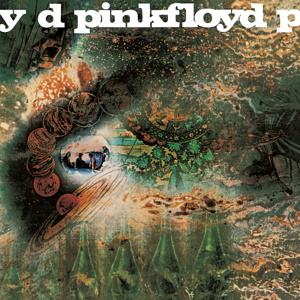
Pink Floyd: Saucerful of Secrets (1968)


[Notes by G] The band's sophomore release catches the band in a time of forced transition from the Syd Barrett driven band of Piper to the Waters/Gilmour juggernaut that would power the 1970's prog-rock movement through to it's eventual death. Bridging both predominant vibes of the psychedelic sixties (light, whimsical and stoned versus dark, heavy and stoned), the album mixes both sensibilities. For example, the song Corporal Clegg, with it's bouncy rhythm and a kazoo in the musical forefront is, has a dark lyrical counterpoint (really it's a song about madness, limb amputation and the toll of war). What really defines this album and puts it up there in the annals of rock and roll history are the mostly instrumental pieces including he title track and Set the Controls for the Heart of the Sun. Forever associated with LSD and the band's first album, Piper at the Gates of Dawn (re-issued together in the late seventies as "A Nice Pair"), this album remains one of my all time favourites.


Also, you have to check out this link. It absolutely blew me away and shows clearly that there's an uncredited image from Doctor Strange comic hidden in the album art. I certainly never noticed this before. But now that I see it, I cant help but see it everytime.


Augustus Pablo: King Tubby Meets the Rockers Uptown (1976)


[Notes from the discussion board of Rateyourmusic.com]Aphexquan said: ... It's a compilation of tracks that Augustus Pablo produced from 1972 to 1975 with artists like Jacob Miller and Hugh Mundell. Pablo then brought these tracks to King Tubby. The result is this meeting of two brilliant talents. You've got Augustus Pablo on clavinet and organ-piano. I find that Pablo's melodies have this very earthy, pastoral quality to them. Then King Tubby adds these effects like echo, reverb, and delay to create tension and release but he never overwhelms the natural beauty of the songs. It's like cosmic folk music. The bass lines, pushed to the front of the mix, have this great thick and fat sound to them. Check out the bass swagger on "555 Dub Street". If there actually was a street called Dub, that bass line would pimp stroll its sidewalks. And on the title track, you can pretty much see the beginnings of drum 'n' bass when it was just a glimmer in it's mother's eyes. I highly recommend this album as an introduction to dub and a lesson in how the mixing desk can be an instrument in its own right.

Wednesday, 25 November 2015

Statistical Interlude


From K:
 
Gents,
 
Since G’s proposed blog table wasn’t providing any further context to the # of wins by player that it was presenting, as promised, I’ve compiled the history of the blog entries into a spreadsheet, and then had a little bit too much nerdy accountant fun with it, in order to try to add that context.
 
Suffice it to say, the numbers still clearly show that G has been dominant (not quite as dominant as his original table suggested, but pretty darn close)!
 
Here’s a few tidbits that you may find interesting by doing a little bit of digging:

·         67 individual games*** have been played in total since the start of the blog (excluding ad hocs, as they aren’t blogged).  The most games played is by W (61), not G (60).  The rest of us are as follows: K (48), Si (44), J (41), M (33), I/Sc/DT combined (10).


·         G has won a staggering 47% of the games that he has played!  He also has easily the most wins (28), by a wide margin.  The rest of us are as follows: K (33%, 16), Si (23%, 10), W (13%, 8), J (7%, 3), M (6%, 2), I/Sc/DT (0%, 0).


·         It ain’t too shabby finishing in 2nd, particularly when we play 5 or 6 player games.  Both W and J have mastered this, as W has the most 2nd places (15), and Jason has the highest rate of 2nd places for the games he’s played (29%).  The complete listing, by rate: J (29%, 12), Si (27%, 12), W (25%, 15), M (24%, 8), G (23%, 14), K (13%, 6), I/Sc/DT (0%, 0).


***Since the data was there to do it, I compiled everything per individual game.  So, on a night where let’s say 3 games of 7 Wonders were played, although the blog declares a single “winner of the night” (which is what G used for his initial table), my stats treat each of the 3 games as a separate game and therefore each winner of an actual standalone game gets credit for that win.
 
Now, the above is just an example of your everyday accountancy nerdism.  To take the accountancy nerdism to the next level, I’ve created my own stat, which I have affectionately termed the “GAMER RATE”.  Basically, I assigned “gamer points” to all 1st and 2nd place finishes, weighted appropriately depending on the number of players in the game.  For instance, a 2nd place finish in a 3-player game earns you 0.25 gamer points, but a 2nd place finish in a 6-player game would earn you 0.5 gamer points (twice as many players, twice as many gamer points).  Using this approach, I then totalled how many gamer points everybody has earned, as well as how many they could have earned had they won every game they had played, and then divided one by the other to get your “GAMER RATE”.  In a nutshell, the higher the gamer rate, the more successful you have been.  I like this approach because it gives some credit not only for wins but also for 2nd place finishes, but it also gives the necessary context because each person’s rate is based on not only the number of games that they actually played in, but also whether those games were 3-player or 4-player or 5-player or 6-player games (so a player is not disadvantaged by having played 20 less games than another player and having predominantly played in the tough 5 or 6 player games, since those facts are directly factored into the determination of their rate).  TOLD YOU I WENT FULL ACCOUNTANT NERD ON THIS!
 
Anyhow, everybody’s current gamer rates are at the far right of the following table:
PLAYER
# of GAMES PLAYED
WINS
SECONDS
Top-2s
TOTAL GAMER POINTS
POSSIBLE GAMER POINTS
GAMER RATE
G
60
28
14
42
24.80
44.50
55.7%
K
48
16
6
22
12.90
35.40
36.4%
Si
44
10
12
22
12.30
34.30
35.9%
W
61
8
15
23
10.15
44.90
22.6%
J
41
3
12
15
7.15
32.10
22.3%
M
33
2
8
10
4.70
26.60
17.7%
I
4
0
0
0
0.00
3.40
0.0%
Sc
4
0
0
0
0.00
3.20
0.0%
DT
2
0
0
0
0.00
2.00
0.0%

From M:
I still say what's most important is personality. Could you do my report cards next time K?
 
From K:
Updated:
PLAYER
# of GAMES PLAYED
WINS
SECONDS
Top-2s
TOTAL GAMER POINTS
POSSIBLE GAMER POINTS
GAMER RATE
Personality
Potato Chip Consumption Efficiency
THE Y QUOTIENT
M
33
2
8
10
4.70
26.60
17.7%
99.1%
-40%
76.8%
G
60
28
14
42
24.80
44.50
55.7%
1.0%
20%
76.7%
Si
44
10
12
22
12.30
34.30
35.9%
3.0%
15%
53.9%
K
48
16
6
22
12.90
35.40
36.4%
2.0%
10%
48.4%
W
61
8
15
23
10.15
44.90
22.6%
4.0%
20%
46.6%
J
41
3
12
15
7.15
32.10
22.3%
5.0%
15%
42.3%
I
4
0
0
0
0.00
3.40
0.0%
0.0%
0%
0.0%
Sc
4
0
0
0
0.00
3.20
0.0%
0.0%
0%
0.0%
DT
2
0
0
0
0.00
2.00
0.0%
0.0%
0%
0.0%
 

Thursday, 19 November 2015

2015-11-19 Cities of Wonder


6 Players: G, J, K, M, Si, W
Game: 7 Wonders: Cities expansion
Location: Si
Choice: Si

Game One:


Player Points
J 59
W 58
G 58
Si 56
K 50
M 48

Game Two:

Player Points
K 73
Si 59
M 57
G 55
J 54
W 46

Final Tally:

Player Points
K 123
Si 115
J 113
G 113
M 105
W 104

Game Notes:
  • W & Si were red-shirted ensigns tweedledee and tweedledum
  • Much discussion of Malawi (where is it, exactly? for example)
  • Every player had their own tiny bag of chips.
  • Music programmed by Si and was all vinyl.
  • Si offered a prize to the first person to identify the band playing on tonight's first LP.
  • G immediately and correctly named Tangerine Dream.
  • There was no prize given.

Music Notes:

Tangerine Dream: Ricochet (1975)

First live album by the seminal electro-ambient band, recorded during a 1975 European tour if you can believe that.

Yes: Tormato (1978)

[relayer.com] The album is named after Yes Tor (tor meaning mountain) in Devon, UK The story goes that the band, when first presented with the proposed album cover, didn't like it and someone through a tomato at the artwork. The result went down well and was used, with the album name changing too.

[ultimateclassicrock]Quarrels between Yes members were nothing new, and members came and went on a regular basis, but things seemed particularly stormy during this period. Singer Jon Anderson and keyboardist Rick Wakeman both exited in the following months. Wakeman’s displeasure became particularly evident during an infamous incident when he hurled a tomato at the artwork for the record, which was then titled Yes Tor, after a geological formation in southern England.
“We had paid a fortune for the artwork – which, when we were shown it, we all agreed we had been ripped off,” he later recalled. “It was a pile of brown smelly stuff. I picked up a tomato and threw it at it. … [The title] was hastily changed to Tormato.”

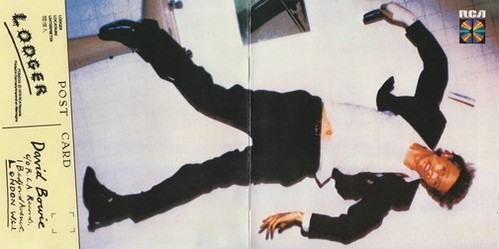
David Bowie: Lodger (1979)

This was terrible.

[AllMusic] On the surface, Lodger is the most accessible of the three Berlin-era records David Bowie made with Brian Eno, simply because there are no instrumentals and there are a handful of concise pop songs. Nevertheless, Lodger is still gnarled and twisted avant pop; what makes it different is how it incorporates such experimental tendencies into genuine songs, something that Low and Heroes purposely avoided. "D.J.," "Look Back in Anger," and "Boys Keep Swinging" have strong melodic hooks that are subverted and strengthened by the layered, dissonant productions, while the remainder of the record is divided between similarly effective avant pop and ambient instrumentals. Lodger has an edgier, more minimalistic bent than its two predecessors, which makes it more accessible for rock fans, as well as giving it a more immediate, emotional impact. It might not stretch the boundaries of rock like Low and Heroes, but it arguably utilizes those ideas in a more effective fashion.

Fleetwood Mac: Greatest Hits (1971)

First compilation released by this band. Later re-released as The Best of Peter Green's Fleetwood Mac. Before their rise to fame in the cocaine-fueled 1970's, FMac was a dynamite blues band in the electrified Chicago style so popular in the late 1960's.

G correctly identified Elmore James as the originator of Shake Your Moneymaker which is covered very nicely on this album. On the other hand, G was unaware that Black Magic Woman was Peter Green's song and is featured nicely on this album.

Thursday, 12 November 2015

2015-11-12 An Empire Rises


Maybe next week's game?
5 Players: G, Si, J, Sc, W
Game: Imperial 2030
Location: W
Choice: Sc

Game One:
Player Points
Si 108
J 103
G 103
W 82
Sc 69


what each Thursday offers M:
a new game or new version of a game never played before
and a whole new set of rules
Game Notes:

  • China was the first country to reach the x5 threshold
  • We kinda went late but we finished. yay!
  • M was missing this week leaving only speculation as to his Thursday evening potato chip consumption.


Music Notes:
https://www.youtube.com/watch?v=0eCkrEBW1KMBlack Sabbath: Sabbath Bloody Sabbath (1973)

Fifth album for the venerated rockers continuing in much the same vane as Vol 4, at least on the first side (the second side with the introduction of synthesizers had a more pop-oriented feel and presages some later Osbourne solo era albums).

Ozzy said about the time: "Tony had been doing coke literally for days - we all had, but Tony had gone over the edge. I mean, that stuff just twists your whole idea of reality. You start seeing things that aren't there. And Tony was gone. Near the end of the gig he walked off stage and collapsed."


Also, Osbourne has said that Sabbath Bloody Sabbath was "the beginning of the end" for Black Sabbath's original line-up. insert sad face emoticon here.

Herbaliser Band: Session One (2000)

Hip hop duo Herbaliser reproduces a bunch of tracks from their first three albums live in the studio with a funky jazz band. Most tracks are completely instrumental, and vocals are only present in sample form on two tracks ("Who's the Realest?" and "The Sensual Woman").


LemonJelly: KY (2000)

The so-called debut release actually just their first full length cull of tracks from earlier EP's. Personally, I enjoyed the beats and sounds but pitchfork eviscerates the album here. ouch.

AllMusic says:  It's downtempo for the acid generation, an eschewing of popular prêt-à-porter after-hour aesthetics.


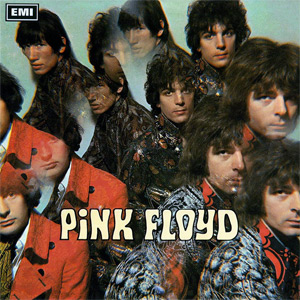
Pink Floyd: Piper at the Gates of Dawn (1967)

Do I really have to explain the appeal of this album? Their first full length featuring the songwriting stylings of Sid Barret himself. Named after a scene from Wind of the Willows. This psychdelic masterpiece with it's twist of childlike whimsy and fear would provide the background for the swinging London scene. This album when I was sixteen... We named our high school intramural soccer team "Astronomy Domine" after the opening track. That didn't go over great...


Thursday, 5 November 2015

2015-11-05 Remember, remember


6 Players: Si, J, W, G, M & DT
Game: 7 Wonders
Location: Si
Choice: M

Game One:
 
Player Points
W 62
G 56
Si 55
J 55
M 46
DT 40

Game Two:

Player Points
G 55
M 52
J 51
W 43
Si 39
DT 38


Final Tally:

Player Points
G 111
J 106
W 105
M 98
Si 93
DT 78

Game Notes:
  • Welcome our ex-patriot DT back to the table for a special night. Hopefully, he'll be back in town again for xmas gaming.
  • There was much derision directed at Maceo Parker until the second side tracks started up and players started to change their initial impression and began to enjoy the not-at-all-Kenny-G-like sounds coming from Si's space age stereo.
  • Once again, M overcame unyielding temptation and avoided eating even a single tasty, tasty potato chip.

Music Notes:

The Kinks - Kink Size (1965)
The Kinks - Kinkdom (1965)

[Notes from Rising Storm] “Kinks-Size” and “Kinkdom” were not official album releases, but like the Great Lost Album they were American label releases containing excellent material and superior track line-ups.

Kinks-Size was released in March of 1965 by Reprise in order to capitalize on the big albumless hits, Tired of Waiting For You and All Day And All Of The Night. Louie Louie, I Gotta Go Now, Things Are Getting Better, and I’ve Got That Feeling came from the British EP “Kinksize Session” (clearly an inspiration for this album’s title), while I’m A Lover Not A Fighter and I Gotta Move were originally on the All Day EP. I’m A Lover and Revenge were shelved cuts from the “Kinks” debut. Come On Now was a track from their upcoming 2nd official album “Kinda Kinks.”


Kinkdom was released in November of 1965, three months after Kinda Kinks. This release comprised tracks from the British EP “Kwyet Kinks” (A Well Respected Man, Such A Shame, Wait Till The Summer Comes Along, Don’t You Fret) as well as some of the best unreleased (in the US) British singles (Never Met A Girl Like You Before, See My Friends, Who’ll Be The Next In Line, It’s Alright). Naggin’ Woman was an unreleased cut from the UK edition of “Kinda Kinks,” and Louie Louie is repeated from “Kinks-Size,” an inexplicable move by Reprise.

These albums best represent the scorching sound of the early Kinks, appropriately ravaged by Shel Talmy’s untrained production style with songwriting strong enough to bolster the genius of Ray Davies. Don’t waste your money on incomplete box sets. Nothing the Kinks recorded should be considered extraneous.

Maceo Parker - Roots Revisited (1990)

[Notes from SputnikMusic] Maceo Parker is a funk monster. He started his career playing saxophone for James Brown. He left the Godfather of Soul to join none other than George Clinton and the legendary Parliament, before going back with James Brown and later on Bootsy Collin’s own band...

His energy is very noticeable on the faster paced funk songs, as he tears through a cover of Ray Charles’ “Them That Got” with a smile on his face. But I particularly appreciate his touch on the ballad, “Children’s World,” which is much more of a departure from Parker’s normal style...

Bootsy Collins helps his old band mate on bass for the CD, and he too holds back his funk to hold down the rhythm section with classic walking bass lines. The organ, Don Pullen, sets a very moody scene in my favorite song “Children’s World” with two simple, melancholy chords, along with two guitar chords from Rodney Jones. From there Maceo catapults and puts out an amazing bluesy ballad. Parker doesn’t overplay at all during the song, feeling out his supporting band. He shuts up at just the right moments before awing the audience again with his playing. 
The National - High Violet (2010)

[Notes from AllMusic] The National have worn a lot of hats since their 2001 debut, but they’ve never been able to shake the rural, book-smart, quiet malevolence of the Midwest. The Brooklyn-groomed, Ohio-bred indie rock quintet’s fifth full-length album navigates that lonely dirt road where swagger meets desperation like a seasoned tour guide, and while it may take a few songs to get going, there are treasures to be found for patient passengers. The National's profile rose considerably after 2007’s critically acclaimed The Boxer, and they have used that capital to craft a flawed gem of a record that highlights their strengths and weaknesses with copious amounts of red ink. High Violet oozes atmosphere, but moves at a snail’s pace. The Cousteau-esque “Terrible Love” hardly bursts out of the gate, and the subsequent “Sorrow” and “Anyone’s Ghost” (despite Bryan Devendorf’s locomotive drumming) lack the hooks to reel anybody in on first listen. The album begins to take shape on “Afraid of Everyone,” a slow-build midtempo rocker that expertly utilizes the Clogs’ (guitarist Bryce Dessner's other chamber pop band) prickly orchestrations, but it’s the punishing “Bloodbuzz Ohio” that serves as High Violet's centerpiece. Built on a foundation that fuses together TV on the Radio's “Halfway Home” and Arcade Fire's “No Cars Go,” its refrain of “I still owe money to the money, to the money I owe” seems both relevant and nostalgic, resulting in a highway anthem that feels like the anti-“Born to Run.” Other standout cuts like “Conversation 16,” “England," and the darkly funny/oddly beautiful closer, “Vanderlyle Crybaby Geeks,” trumpet Violet’s second-half supremacy, but even they tremble beneath the "Bloodbuzz" intoxication. Muscular, miserable, mighty, and meandering, High Violet aims for the seats, but only hits about half of them.