Thursday, 24 September 2015

2015-09-24 Queen of the Stone Age

Stone Age Style
5 Players: W, J, M, G, K

Stylin'!
Game: Stone Age: Style is the Goal expansion
Choice: M
Location: W

Game One
K (140 pts), G (130 pts), J (118 pts), M (114 pts) & W (107 pts)

Final Tally:
K was declared this week's queen victor

Game Notes:
  • "Losty keeps his tool intact"
  • other name suggestions: Spacey/Toony/Tuney/Losty/Dopey
Music Notes:
 
Augustus Pablo: East of the River Nile (1977)
 
East of the River Nile[Notes from RollingStone.com] Dub music might be the most accurate-ever musical translation of stoned brainwaves. In the hands of Augustus Pablo, who transformed his signature instrument, the melodica, from kindergarten singalong helper to the sonic equivalent of an indica-packed ice bong, dub reached its most sublime heights. This instrumental set is his chill-out masterpiece, with productions by dub's two grandmasters, King Tubby and Lee "Scratch" Perry, along with grooves by a Seventies reggae A-team and occasional vocal fragments that surface like half-formed thoughts before slipping away again. Potent.
 
 
ZZTop: Tres Hombres (1973)
 
ZZ Top - Tres Hombres.jpg[Notes from AllMusic.com] Tres Hombres is the record that brought ZZ Top their first Top Ten record, making them stars in the process. It couldn't have happened to a better record. ZZ Top finally got their low-down, cheerfully sleazy blooze-n-boogie right on this, their third album. As their sound gelled, producer Bill Ham discovered how to record the trio so simply that they sound indestructible, and the group brought the best set of songs they'd ever have to the table. On the surface, there's nothing really special about the record, since it's just a driving blues-rock album from a Texas bar band, but that's what's special about it. It has a filthy groove and an infectious feel, thanks to Billy Gibbons' growling guitars and the steady propulsion of Dusty Hill and Frank Beard's rhythm section. They get the blend of bluesy shuffles, gut-bucket rocking, and off-beat humor just right. ZZ Top's very identity comes from this earthy sound and songs as utterly infectious as "Waitin' for the Bus," "Jesus Just Left Chicago," "Move Me on Down the Line," and the John Lee Hooker boogie "La Grange." In a sense, they kept trying to remake this record from this point on -- what is Eliminator if not Tres Hombres with sequencers and synthesizers? -- but they never got it better than they did here.
 
Jerry Garcia Band: Don't Let Go (2001, Recorded May 21, 1976)
 
[Notes from AllMusic.com] During the 20-month hiatus that the Grateful Dead took from the road, lead guitarist Jerry Garcia began fronting and touring with one of the premier cover bands of the time. Don't Let Go captures this powerhouse rhythm section in the intimate confines of San Francisco's Orpheum Theatre only a few weeks prior to the Dead's resuscitation. This all-star incarnation of the Jerry Garcia Band includes Dead members Keith Godchaux on piano and Donna Jean Godchaux on vocals. Since the late '50s, Bay area bassist John Kahn had been performing with the likes of blues legends John Lee Hooker, Michael Bloomfield, and Nick Gravenites. Kahn remained with the band until they disbanded following Garcia's death in August of 1995. Ron Tutt, while perhaps best remembered as Elvis Presley's favorite drummer, has also performed on more Top 40 singles and albums than almost any other drummer -- the notable exception being Hal Blaine. This band is about infectious rhythms and soul. Garcia plays with an energy and freedom of spirit which he rarely achieved during his final two decades with the Grateful Dead. This was likely due, at least in part, to the encyclopedic catalog of material -- drawing from such disparate sources as Allen Toussaint's "I'll Take a Melody," J.J. Cale's "After Midnight," and Bob Dylan's "Knocking on Heaven's Door." The band uses the structure of each song as a platform for their unique brand of instinctual aural acrobatics. The interplay amongst the instrumental quartet is best described as inspired telepathy. For instance, between the verses of Hank Ballard's "Tore Up Over You" the rhythmic pockets left by Garcia's incendiary guitar leads are filled in with a swing time precision and grace that harkens back to Benny Goodman or Duke Ellington's orchestra. Don't Let Go is highly recommended for the curious enthusiast as well as the insatiable Deadhead.
 
Morcheeba: Parts of the Process (2003)
 
[Notes from AllMusic.com] Parts of the Process reflects on five albums and seven years for the London trip-hop act Morcheeba. This stunning 18-track set isn't chronologically arranged, but all the hits and staples are here. Morcheeba loyalists may be slightly disappointed by the exclusion of "Who Can You Trust?" but overall, Parts of the Process captures the beauty of Morcheeba. Big Calm seems to be the major album represented with "The Sea," "Over and Over," "Let Me See," and the song for which this album is named, "Parts of the Process." Other amazing tracks from the band's first release, Who Can You Trust? -- "Tape Loop" and the brooding chill of "Trigger Hippie" -- make this album more complete. But other select cuts are equal in style and still appeal. Cuts from the less popular Charango album add a bit of flair to Morcheeba's sophisticated catalog, especially "What New York Couples Fight About." Even the stormy narrative "Rome Wasn't Built in a Day," from Fragments of Freedom, is chalked in. Those who found Morcheeba's 2001 Back to Mine collection crucial to the band's body of work shouldn't distress; that album doesn't really fit with the direction of this collection. Instead, the trio treats listeners to two brand-new tracks. Big Daddy Kane joins Morcheeba for the funkadelic, hip-hop groove "What's Your Name," while "Can't Stand It" is the band's attempt at chamber pop. While Morcheeba isn't one of the more exclusive acts of British electronic music, they've assessed their power as artists. Parts of the Process is well-suited for those unfamiliar with the band, while still tailored for those faithful followers, too.
totally realistic depiction of stone age fashion


Thursday, 17 September 2015

2015-09-17 Righteous Babel

Future State depiction of K's backyard

6 Players: W, J, M, S, G, K
Game: 7 Wonders: Babel + Great Works
Choice: J
Location: W

Game One (7 Wonders + Babel):
 M (67 pts), K (63 pts), W (55 pts), G (53 pts), S (52 pts) & J (46 pts)

Game Two (7 Wonders + Great Works):
 K (57 pts), S (55 pts), G (51 pts), W (47 pts), M (43 pts) & J (30 pts)

Final Tally:
K120, M110, S107, G104, W102, J76
K was declared this week's victor

this Babel shit be serious!
Game Notes:
  • Suggested renaming as follows: Angry, Chatty, County, Country, Thinky and Waffley
  • No I didn't mean "now" now
  • We were instructed to Hide Your Sack
Music Notes:
 
First, a couple well received bands from Blue Skies 2015
 
 
GRWF Album Art Thumbnail
more than just nice to look at
[Notes from UKFolkRadio] Not to be confused with Bombadil, the psychedelic pop American trio, this lot are a Canadian quartet who line up as Sarah Frank (fiddle, banjo), Luke Fraser (guitar, mandolin), Anh Fung (flute) and Alan Mackie and Evan Stewart who both handle upright bass, and whose influences embrace Celtic folk music and bluegrass...
Organic in feel, it’s an unassuming album that never makes a big fuss about the members’ skills, simply allows them to do what they do with consummate and fluid grace and ease, and, as such, offers a very enjoyable travelling companion.


“Jaffa Road blends Jewish, jazz, Indian and Arabic music with electronica and dub. The result is fantastic.”  -CBC Radio One
 
Marshall Tucker Band: The Marshall Tucker Band (1973)
 
little known fact: the Marshall Tucker Band
were the "boys in the bright white sports car"
referred to as such in the classic Trooper hit
[Notes from AllMusic] Taking a page from their Capricorn Records labelmates and Southern rock contemporaries the Allman Brothers, the Marshall Tucker Band issued a self-titled debut blending the long and winding psychedelic and jam band scene with an equally languid and otherwise laid-back country-rock flavor. Into the mix they also added a comparatively sophisticated jazz element -- which is particularly prominent throughout their earliest efforts. The incipient septet featured the respective talents of Doug Gray (vocals), Toy Caldwell (guitar/vocals), his brother Tommy Caldwell (bass/vocals), George McCorkle (guitar), Paul Riddle (drums), and Jerry Eubanks (flute/sax/vocals). Their free-spirited brand of Southern rock was a direct contrast to the badass rebel image projected by the Outlaws or Lynyrd Skynyrd. This difference is reflected throughout the 1973 long-player The Marshall Tucker Band. The disc commences with one of the MTB's most revered works, the loose and limber traveling proto-jam "Take the Highway." The improvised instrumental section features some inspired interaction between Toy Caldwell and Eubanks. This also creates a unique synergy of musical styles that is most profoundly exhibited on the subsequent cut, "Can't You See." Caldwell's easygoing acoustic fretwork babbles like a brook against Eubanks lonesome airy flute lines. The remainder of the disc expounds on those themes, including the uptempo freewheelin' "Hillbilly Band." Unlike what the title suggests, the track is actually more akin to the Grateful Dead's "Eyes of the World" than anything from the traditional country or bluegrass genres. "Ramblin'" is an R&B rave-up that leans toward a Memphis style with some classy brass augmentations. The effort concludes on the opposite side of the spectrum with the tranquil gospel rocker "My Jesus Told Me So," offering up Caldwell's fluid guitar work with a sound comparable to that of Dickey Betts. "AB's Song" is an acoustic folk number that would not sound out of place being delivered by John Prine or Steve Goodman. This eponymous effort established the MTB's sound and initiated a five-year (1973-1978) and seven-title run with the definitive Southern rock label, Capricorn Records.
 
trippy
Pink Floyd: Piper at the Gates of Dawn (1967)
 
[Notes from AllMusic] The title of Pink Floyd's debut album is taken from a chapter in Syd Barrett's favorite children's book, The Wind in the Willows, and the lyrical imagery of The Piper at the Gates of Dawn is indeed full of colorful, childlike, distinctly British whimsy, albeit filtered through the perceptive lens of LSD. Barrett's catchy, melodic acid pop songs are balanced with longer, more experimental pieces showcasing the group's instrumental freak-outs, often using themes of space travel as metaphors for hallucinogenic experiences -- "Astronomy Domine" is a poppier number in this vein, but tracks like "Interstellar Overdrive" are some of the earliest forays into what has been tagged space rock. But even though Barrett's lyrics and melodies are mostly playful and humorous, the band's music doesn't always bear out those sentiments -- in addition to Rick Wright's eerie organ work, dissonance, chromaticism, weird noises, and vocal sound effects are all employed at various instances, giving the impression of chaos and confusion lurking beneath the bright surface. The Piper at the Gates of Dawn successfully captures both sides of psychedelic experimentation -- the pleasures of expanding one's mind and perception, and an underlying threat of mental disorder and even lunacy; this duality makes Piper all the more compelling in light of Barrett's subsequent breakdown, and ranks it as one of the best psychedelic albums of all time.

Thursday, 10 September 2015

2105-09-10 Wah-Wah-Wah-Wah-Wonders


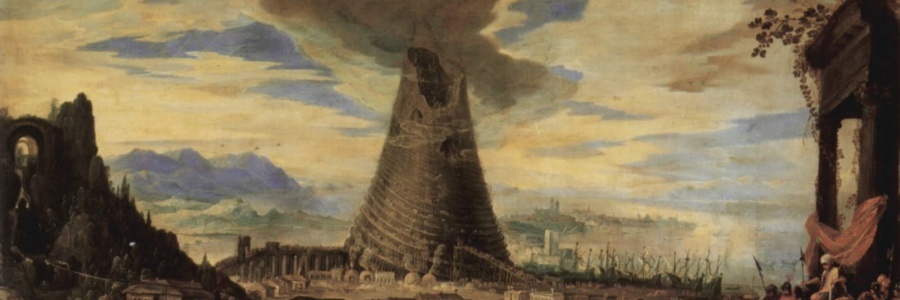
Tower of babel 1222

5 Players: W, J, M, S, G
Age I Great Works: Giant Ass Cards
Game: 7 Wonders: Great Works expansion
Choice: G
Location: W

Game One:
G (59 pts), J (52 pts), S (51 pts), M (44 pts) & W (40 pts)

Game Two:
G (45 pts), M (34 pts), S (33 pts), W (32 pts), J (31 pts)

Final Tally:
G was declared this week's victor

Game Notes:
  • notes lost
Music Notes:

  • notes lost; relying on memory

Acid Jazz mix (?)

Black Sabbath: Masters of Reality (1971)

[Notes from AllMusic.com] The shortest album of Black Sabbath's glory years, Master of Reality is also their most sonically influential work. Here Tony Iommi began to experiment with tuning his guitar down three half-steps to C#, producing a sound that was darker, deeper, and sludgier than anything they'd yet committed to record. (This trick was still being copied 25 years later by every metal band looking to push the limits of heaviness, from trendy nu-metallers to Swedish deathsters.) Much more than that, Master of Reality essentially created multiple metal subgenres all by itself, laying the sonic foundations for doom, stoner and sludge metal, all in the space of just over half an hour. Classic opener "Sweet Leaf" certainly ranks as a defining stoner metal song, making its drug references far more overt (and adoring) than the preceding album's "Fairies Wear Boots." The album's other signature song, "Children of the Grave," is driven by a galloping rhythm that would later pop up on a slew of Iron Maiden tunes, among many others. Aside from "Sweet Leaf," much of Master of Reality finds the band displaying a stronger moral sense, in part an attempt to counteract the growing perception that they were Satanists. "Children of the Grave" posits a stark choice between love and nuclear annihilation, while "After Forever" philosophizes about death and the afterlife in an openly religious (but, of course, superficially morbid) fashion that offered a blueprint for the career of Christian doom band Trouble. And although the alternately sinister and jaunty "Lord of This World" is sung from Satan's point of view, he clearly doesn't think much of his own followers (and neither, by extension, does the band). It's all handled much like a horror movie with a clear moral message, for example The Exorcist. Past those four tracks, listeners get sharply contrasting tempos in the rumbling sci-fi tale "Into the Void," which shortens the distances between the multiple sections of the band's previous epics. And there's the core of the album -- all that's left is a couple of brief instrumental interludes, plus the quiet, brooding loneliness of "Solitude," a mostly textural piece that frames Osbourne's phased vocals with acoustic guitars and flutes. But, if a core of five songs seems slight for a classic album, it's also important to note that those five songs represent a nearly bottomless bag of tricks, many of which are still being imitated and explored decades later. If Paranoid has more widely known songs, the suffocating and oppressive Master of Reality was the Sabbath record that die-hard metalheads took most closely to heart.


Funkadelic: One Nation Under A Groove (1978)

[Notes from AllMusic.com] One Nation Under a Groove was not only Funkadelic's greatest moment, it was their most popular album, bringing them an unprecedented commercial breakthrough by going platinum and spawning a number one R&B smash in the title track. It was a landmark LP for the so-called "black rock" movement, best-typified in the statement of purpose "Who Says a Funk Band Can't Play Rock?!"; more than that, though, the whole album is full of fuzzed-out, Hendrix-style guitar licks, even when the music is clearly meant for the dancefloor. This may not have been a new concept for Funkadelic, but it's executed here with the greatest clarity and accessibility in their catalog. Furthermore, out of George Clinton's many conceptual albums (serious and otherwise), One Nation Under a Groove is the pinnacle of his political consciousness. It's unified by a refusal to acknowledge boundaries -- social, sexual, or musical -- and, by extension, the uptight society that created them. The tone is positive, not militant -- this funk is about community, freedom, and independence, and you can hear it in every cut (even the bizarre, outrageously scatological "P.E. Squad"). The title cut is one of funk's greatest anthems, and "Groovallegiance" and the terrific "Cholly" both dovetail nicely with its concerns. The aforementioned "Who Says a Funk Band Can't Play Rock?!" is a seamless hybrid that perfectly encapsulates the band's musical agenda, while "Into You" is one of their few truly successful slow numbers. The original LP included a three-song bonus EP featuring the heavy riff rock of "Lunchmeataphobia," an unnecessary instrumental version of "P.E. Squad," and a live "Maggot Brain"; these tracks were appended to the CD reissue. In any form, One Nation Under a Groove is the best realization of Funkadelic's ambitions, and one of the best funk albums ever released.

Thursday, 3 September 2015

2015-09-03 Village idiots down at the Port

To sea Cap'n!


unmarked graves

4 Players: W, K, G, J
Location: W
Choice: W

Game One:
W (66 pts), G (62 pts), J (54 pts) & K (40 pts)
 
Final Tally:
  • W was declared the winner


the great book at game end
W Yellow
G White
J Red
K Blue

Notes:
  • Actually two expansions as we played with the Silver and Gold Goal cards as well as the port
  • All players enjoyed both expansions
  • "Pink over brown" was overheard at the table
  • Final Mass awarded W and extra two points. We weren't sure if we played this correctly as the rules, we felt were vague about whether at game end you have a "final mass" or not.
  • Another rule that we were unsure about was if you had to stop whenever your boat passed a landing spot (no hourglass symbol) or if you could continue on your journey
  • K described the concepts and game play of his in-development game, promising a prototype soon to game test


Music:

Morcheeba: Big Calm (1998)

[Notes from AllMusic.com] Realizing that trip-hop was a dead end, at least as far as hipness goes, Morcheeba expanded their sonic palette on their second album, Big Calm. Trip-hop and dance rhythms remain, but the trio has spent more time writing songs, crafting an album where pop, lounge, film soundtracks, reggae, jazz, and electronica all peacefully coexist. Consequently, Big Calm is a stylistic tour de force, evidence that Morcheeba have turned into a mature, sophisticated group with impeccable taste. Occasionally, the album can sound a little distant, as if the fusions and productions were more important than the actual songs, but the trio is so musically adept, and Skye Edwards' voice is so enchanting, that Big Calm become irresistible in its own way.

Broken Bells: ?

Grateful Dead: Dave's Picks, Vol. 13: Winterland, San Francisco, CA 2/24/74
 
[Notes from AllMusic.com]The full three-set performance from the band's February 24, 1974 date, the third of three nights at San Francisco's Winterland Arena. This date finds the band in fantastic form, using a sound system that predated their famous "wall of sound" amplifier system by just a month, and spinning their cosmic wheels through a spirited first set of rockers like "U.S. Blues," "Candyman," and "China Cat Sunflower" before relaxing into more wide-reaching territory in the second and third sets on extensive jams like "Weather Report Suite" and an incredible half-hour "Dark Star" that melts gently into "Morning Dew." The sound is exceptional on this particular set, and the vibe is more energetic and bright than usual, resulting in one of the more lively Dave's Picks to focus on the early-'70s era Dead.